Revolutionizing Long-Context AI: MiniMax Introduces MiniMax Sparse Attention (MSA) for 109B-Parameter MoE Models
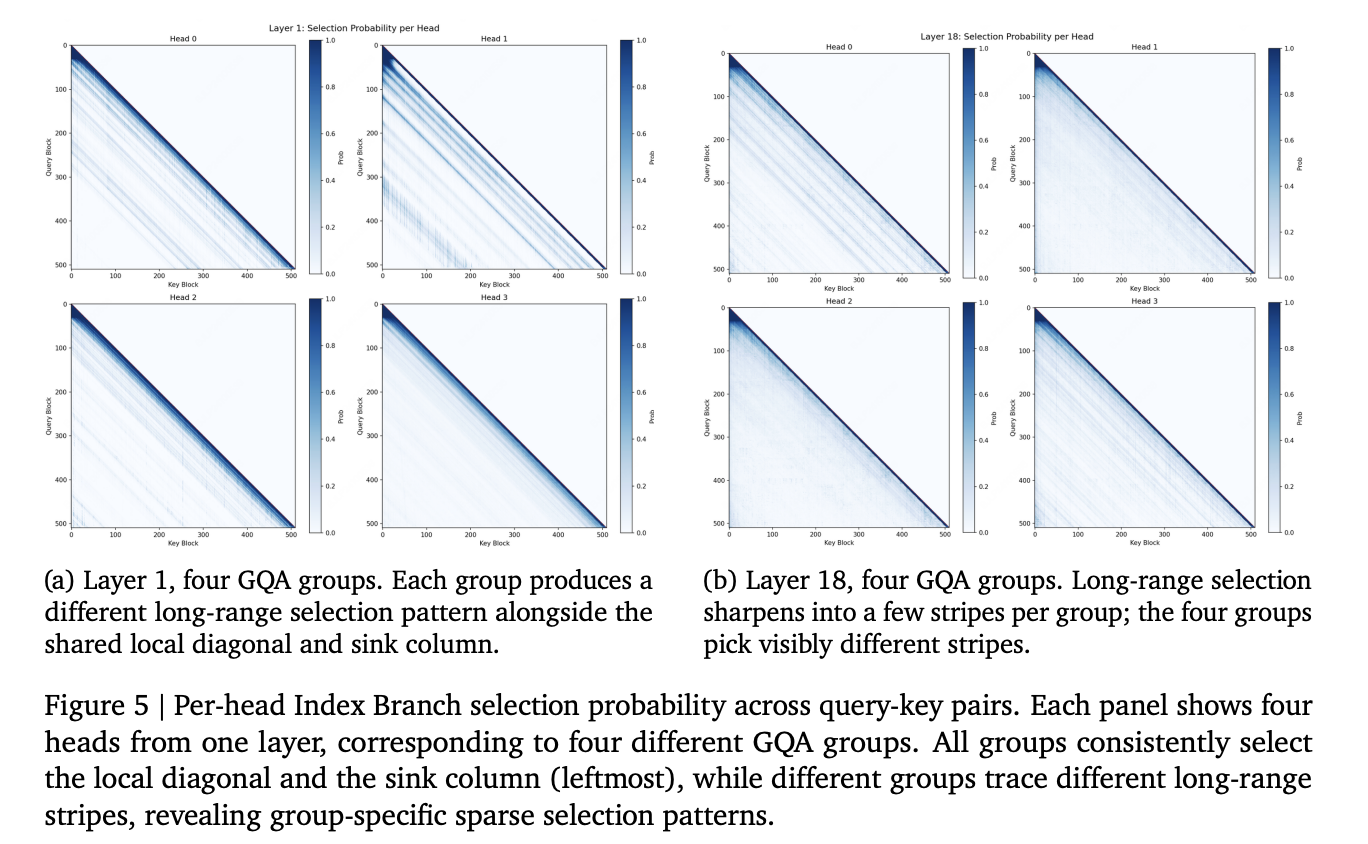
MiniMax has launched a groundbreaking attention mechanism called MiniMax Sparse Attention (MSA). This innovative technology aims to address the quadratic computational cost associated with attention operations in long-context AI scenarios. MSA is built on the principles of Grouped Query Attention (GQA) and has been successfully implemented in a 109-billion-parameter Mixture-of-Experts (MoE) model, trained on an extensive dataset of 3 trillion tokens of multimodal data. The company has made its inference kernel open-source, allowing for wider adoption, and has incorporated this advanced technology into its production model, MiniMax-M3.
How MiniMax Sparse Attention (MSA) Solves the Long-Context Bottleneck
Traditional attention mechanisms struggle with efficiency as the context length increases, leading to significant computational bottlenecks for AI models. MiniMax Sparse Attention (MSA) effectively addresses this challenge with its two-branch architecture, which reduces computational overhead while maintaining high accuracy:
- Index Branch: Determines which key-value blocks each query should process.
- Main Branch: Executes precise attention calculations only on selected blocks.
This block-level selection operates at 128-token granularity, allowing each query to maintain a fixed budget of 2,048 key-value tokens (16 blocks × 128 tokens). Unlike dense GQA's O(N) scaling, MSA's O(kBk) complexity remains constant as the context length increases, significantly enhancing efficiency for long sequences in AI applications.
Technical Breakthroughs in Sparse Attention
Two-Branch Architecture Mechanics
The Index Branch introduces two projection matrices to standard GQA layers, facilitating efficient block selection in sparse attention mechanisms. Each GQA group features its own index query head while sharing a common index key head across groups. The process includes:
- Calculating attention scores for visible key tokens within sparse attention.
- Applying max-pooling to elevate scores to the block level in the attention framework.
- Selecting top-k blocks using a combination of global context and local neighborhood preservation techniques.
The Main Branch performs standard softmax attention on the selected blocks, maintaining independence for each query head while sharing block selections within GQA groups. This hybrid approach enables localized focus alongside global context awareness in sparse attention applications.
Training Innovations
MSA's non-differentiable Top-k selection required innovative training methods. The team developed a KL alignment loss to align the Index Branch's distribution with the Main Branch's attention patterns. Key training innovations include:
- Gradient Detach: Isolates index projection training from backbone parameters in sparse attention training.
- Indexer Warmup: Initializes with full attention before activating sparse routing techniques.
- Local Block Reservation: Ensures the preservation of the immediate contextual neighborhood in sparse attention scenarios.
The system supports two training pathways: from-scratch training (MSA-PT) after a 40B-token warmup and conversion from dense GQA checkpoints (MSA-CPT) with continued training on 400B tokens.
Kernel Co-Design for Maximum Efficiency
Hardware-Aware Optimization
To realize theoretical sparsity gains as speed improvements, MiniMax's engineering team developed two key kernel innovations for enhanced performance:
- Exp-free Top-k Selection: This optimization eliminates the overhead of softmax computation, achieving 5.1× faster performance than PyTorch's topk implementation at a context length of 128K, significantly boosting efficiency.
- KV-Outer Sparse Attention: This method optimizes arithmetic intensity through block-level KV iteration, utilizing 128×128 score MMA packing for improved GPU efficiency.
The open-source fmha_sm100 kernel, available under the MIT license, supports multiple precision formats (BF16, FP8, NVFP4, FP4) and delivers significant speedups: 14.2× during prefill and 7.6× during decoding at a context length of 1M on H800 GPUs, enhancing overall processing speed.
| Benchmark | Full Attention | MSA-PT | MSA-CPT |
|---|---|---|---|
| MMLU | 67.0 | 67.2 | 66.8 |
| GSM8K | 76.2 | 77.7 | 73.7 |
| RULER-128K | 75.0 | 77.5 | 75.7 |
Real-World Applications and Implementation of MSA
Target Use Cases for MSA
MSA excels in scenarios where context length is a primary constraint:
- Long-horizon AI Agents: Maintain a 2,048-token attention window regardless of transcript length.
- Codebase Analysis: Selectively focus on relevant code files within large repositories.
- Persistent Memory Systems: Scale conversational state management without increasing decoding costs.
- Video Understanding: Achieve state-of-the-art results on VideoMME (45.48) and TemporalBench.
Implementation Guide for MSA
The fastest deployment path uses Hugging Face's kernels library:
# pip install -U kernels from kernels import get_kernel kernel_module = get_kernel("MiniMaxAI/msa", version=0) sparse_atten_func = kernel_module.sparse_atten_func # Example usage with paged KV tensors sparse_atten_func(...)Advanced users can implement custom workflows using the core components of MSA:
import torch from fmha_sm100 import fmha_sm100, sparse_topk_select # 1. Proxy pass for block scoring proxy_plan = fmha_sm100_plan(...) _, max_score = fmha_sm100(...) # 2. Block selection kv_block_indexes = sparse_topk_select(...) # 3. Sparse attention execution out, _ = fmha_sm100(...)Requirements: NVIDIA SM100 GPU, CUDA Toolkit, Python 3.10+, with a JIT compilation time of several minutes for initial kernel compilation.
Strengths and Limitations of GQA
Key Advantages of GQA
- 28.4× reduction in per-token computation at 1M context length, enhancing efficiency.
- Minimal architectural changes: GQA adds only two projection matrices, maintaining simplicity.
- Flexible training options: GQA supports both from-scratch training and dense checkpoint conversion for versatility.
- Open-source production-ready kernel with MIT licensing, promoting accessibility and collaboration.
Current Limitations of GQA
- NVIDIA SM100-specific optimizations require adaptation for other architectures, limiting compatibility.
- Residual performance gap with full attention on specific long-range retrieval tasks affects effectiveness.
- KL loss introduces training complexity compared to standard attention layers, posing challenges for implementation.
- Performance metrics are tied to MiniMax's internal evaluation suite, which may not reflect broader applicability.